The Energy Conversion Technologies (ECT) section focuses on research, development, and testing of technologies that reduce carbon emissions related to traditional chemical processes and accelerate the integration of renewable energy sources. ECT utilizes novel approaches in catalysis and energy storage and has the ambition to transfer promising research findings from academia to industry. Research lines are within energy storage, PtX and XtP, where we utilize our expertise in electrochemical and chemical engineering, and cover the TRL ladder up to TRL 5/6.
ECT is an engineering section that develops and tests batteries, electrochemical cells, reactors and stacks; conducts process design and model-based optimization of reactors for catalysis/electrocatalysis; and carries out research in scalable synthesis of materials for catalysis and batteries, with a specific focus on characterization of materials and understanding their performance. ECT conducts research in vanadium and organic flow batteries, alkaline electrolysers and hybrid battery/electrolysers, membranes, high-pressure loops for ammonia synthesis and cracking, and catalysts for CO2 electrolysis and operando studies of catalysts.
On a more applied level, the section collaborates with companies such as Hydrogen Pro, SulfiLogger, Topsoe, Eltronic FuelTech, Unisense, and Danish Graphene, and supports their technology development, scale-up and testing. We have collaborations with Danish institutes and universities, as well as EU partners, through collaborative projects.
Keywords: Power-to-X · Electrochemical energy storage · Alkaline electrolysis · Catalysis and CO₂ electrolysis
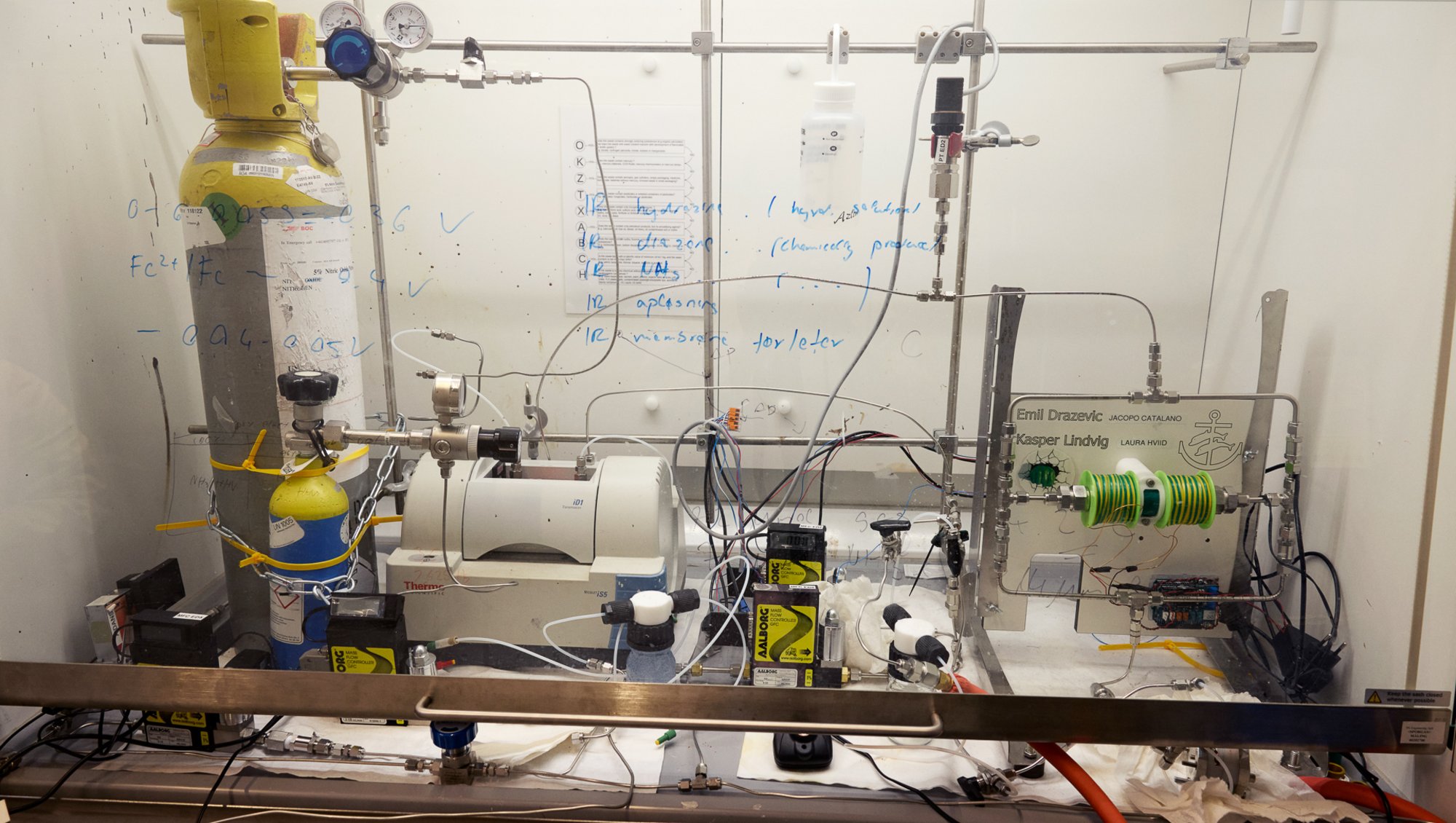
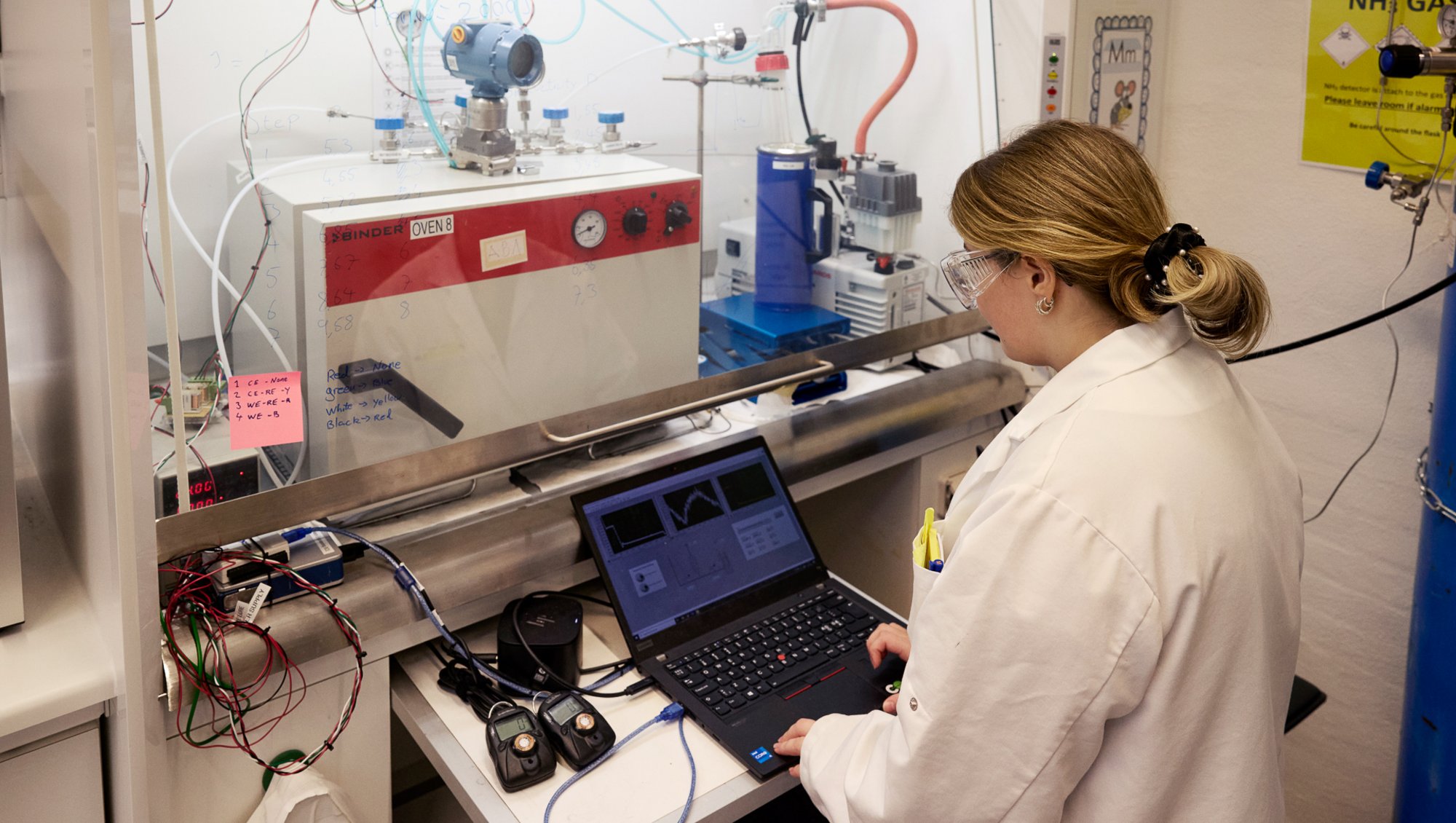

The section’s main strength is its academic backgrounds and interests spanning from pure material synthesis, characterization and physics to classical chemical engineering. This combination of expertise makes us particularly strong in electrochemistry, catalysis, electrochemical engineering, and process engineering, where this knowledge is especially valuable in electrolysers (water, CO2, and ammonia), catalytic processes and membrane separations.
Over the years, we have developed state-of-the-art catalyst materials and characterization tools, including MOF-based catalysts for CO2 reduction, the AUREX operando electrochemical cell, custom-built electrochemical cells, membrane characterization equipment (pressure and electrochemical pressure decay), gas analysis equipment, and systems for evaluating the performance of batteries and electrolysers at both cell and stack level. We also have extensive experience within classical chemical engineering disciplines, including the design and testing of scrubbers, distillation units, chemical vapour deposition reactors and high-pressure catalytic loops. In addition, we have developed prototypes for chemical vapour deposition of nickel, ammonia/water separation, ammonia capture and ammonia synthesis through collaborations with industry partners, including Hydrogen Pro, Eltronic FuelTech and ADISSEO, as well as EU partners.
Our research is highly relevant to current societal challenges, and we are striving to create a global impact by addressing key Sustainable Development Goals, particularly Affordable and Clean Energy (Goal 7) and Climate Action (Goal 13). We pursue these goals through research and development of innovative technologies for energy storage and green hydrogen production, sustainable chemicals and advanced chemical processes.
Alongside research, educating students is a central focus of the section. Students actively participate in our research and development projects and take research-based courses in energy conversion, advanced materials, and catalysis. Many emerging green technologies, including batteries and Power-to-X systems, are based on electrochemical processes. We therefore aim to educate the next generation of engineers with the knowledge and skills needed to develop and implement these technologies.
Below is a list of our key areas within research and development in Energy Conversion Technology at Department of Biological & Chemical Engineering:

