
Power-to-X comes of age: From ambitious vision to strategic necessity
Just a few years ago, Power-to-X was driven by bold ambitions, soaring expectations and, ultimately, a dose of reality. Today, the landscape looks very different. New regulation, major investments and a rapidly emerging European market are transforming Power-to-X from a promising technology into a strategic pillar of Europe's energy future. That was the key message from Aarhus Power-to-X Symposium 2026.


Power-to-X is no longer simply a vision for a greener future.
Across Europe, large-scale hydrogen projects are moving forward, billions of euros are being invested in new production facilities, and the regulatory framework long requested by industry is finally taking shape.
For the first time in several years, there is a renewed sense of confidence among researchers, technology developers and industrial partners working across the Power-to-X value chain.
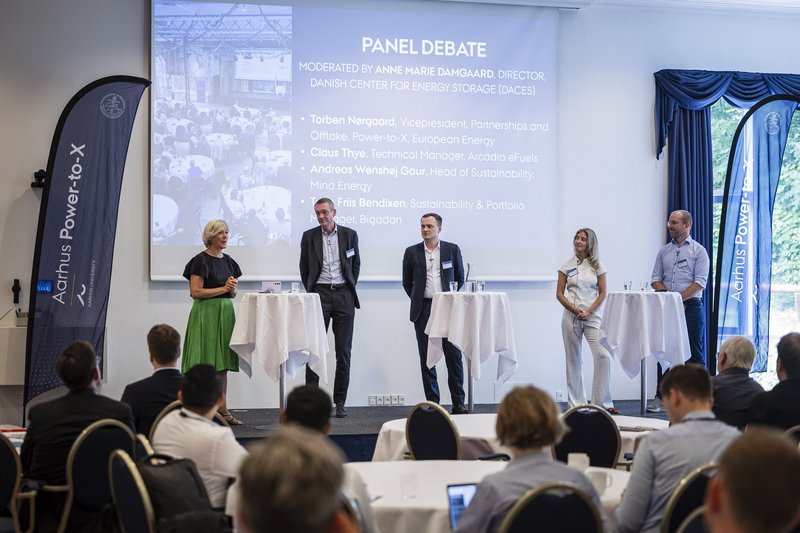
"There is no doubt that we are in a very different place than we were just a few years ago. Europe is under increasing external pressure, and that has made Power-to-X a strategic priority. Regulation is creating a real market for green fuels, giving industry confidence to invest and providing researchers with a much clearer direction," says Anne Marie Damgaard, Director of the Danish Center for Energy Storage (DaCES).
From expectations to realism
When the first major Power-to-X conferences were held only a few years ago, optimism was widespread.
Green hydrogen and electrofuels were widely expected to decarbonise aviation, shipping and heavy industry, and Denmark was widely viewed as one of Europe's frontrunners.
Reality proved more challenging.
Several flagship projects were delayed or cancelled, costs increased, infrastructure lagged behind, and commercial demand developed more slowly than anticipated. The cancellation of several high-profile Danish projects, including Ørsted's large-scale PtX initiatives, marked a turning point for the sector.
Yet those setbacks also forced the industry to mature.
At this year's symposium, discussions focused far less on long-term visions and far more on the practical challenges of deployment: energy systems, hydrogen infrastructure, sustainable carbon sources, market design, testing facilities and integrated industrial value chains.
Energy security is reshaping the conversation
Perhaps the biggest change is that climate is no longer the only driver behind Power-to-X.
Geopolitical uncertainty, energy security and Europe's ambition to reduce its dependence on fossil resources have fundamentally changed the discussion.
Germany, in particular, has emerged as a major catalyst.
As German industry accelerates its transition away from fossil fuels, demand for renewable hydrogen is expected to far exceed domestic production capacity. This has prompted both the German government and the European Union to invest heavily in Danish hydrogen projects and the planned hydrogen pipeline connecting Denmark and Germany.
At the same time, new European blending mandates for sustainable aviation fuels and other renewable fuels are creating the market certainty that industry has been waiting for.
"The green transition has taken on a new strategic dimension. Naturally, Europe is now placing much greater emphasis on resilience, security of supply and energy independence than it did just a few years ago. But perhaps most importantly, regulation is finally providing companies with confidence that a real market for green fuels will emerge," says Anne Marie Damgaard.
While optimism has returned, significant challenges remain.
The success of Power-to-X no longer depends solely on better electrolysers.
Renewable electricity, hydrogen infrastructure, carbon capture, transport networks and industrial off-takers must all develop in parallel if Europe is to build competitive Power-to-X value chains.
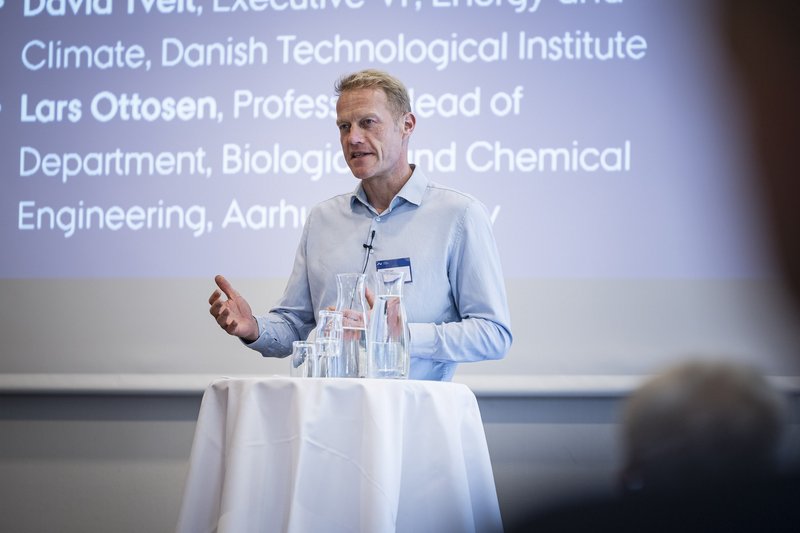
"There is little value in building hydrogen infrastructure if there is no hydrogen flowing through it. Equally, producers will not invest unless customers are ready to buy. Every part of the value chain has to move forward together," says Lars Ottosen, Professor and Head of the Department of Biological and Chemical Engineering at Aarhus University.
He also points to Canada as an example of how rapidly carbon management technologies can move from research to industrial deployment.
"Canada has demonstrated that advanced carbon capture technologies can be successfully scaled. Companies such as Svante have played an important role in that development, and Europe has much to learn from those experiences as we build our own integrated Power-to-X and carbon management value chains," says Lars Ottosen.
From breakthrough technologies to integrated solutions
Research continues to drive innovation in electrolysis, catalyst development, carbon utilisation and sustainable fuel production.
But the role of research is evolving.
Beyond developing better technologies, researchers increasingly need to understand how future energy systems, industrial infrastructure and carbon cycles interact as one integrated system.
"We must continue improving efficiency, reducing costs and developing robust technologies. Regardless of how Europe's energy system evolves, Power-to-X will be part of the solution. Geopolitics may change, but climate change does not. The question is no longer whether Power-to-X has a role to play, but how we scale it intelligently and at the pace required. That is exactly what we are working on at AU Viborg," says Lars Ottosen.
Fact box
Germany's hydrogen strategy is creating momentum for Danish projects
Germany is investing heavily in renewable hydrogen as a key element of decarbonising its steel, chemical and manufacturing industries. Since domestic production will not be sufficient to meet future demand, the country is investing in hydrogen imports from neighbouring countries, including Denmark.
Five Danish hydrogen projects have secured major funding from the European Union and the German government:
- European Energy (Kassø)
- Everfuel (Vejen)
- Copenhagen Infrastructure Partners (the Høst project near Esbjerg)
- MorGen Energy (Esbjerg)
- Hy2gen Nordic (Aabenraa)
Together, the projects are expected to establish approximately 1 GW of electrolysis capacity to supply renewable hydrogen to German industry.
To transport the hydrogen, Denmark and Germany are planning a new cross-border hydrogen pipeline connecting Esbjerg with the German border. The political ambition is for the connection to be operational by around 2030.
Contact
Professor Lars Ottosen
Aarhus University, Department of Biological and Chemical Engineering
Mail: ldmo@bce.au.dk
Tel.: +4551371671
Jesper Bruun
Journalist, Aarhus University
Mail: [email protected]
Tel.: +4542404140